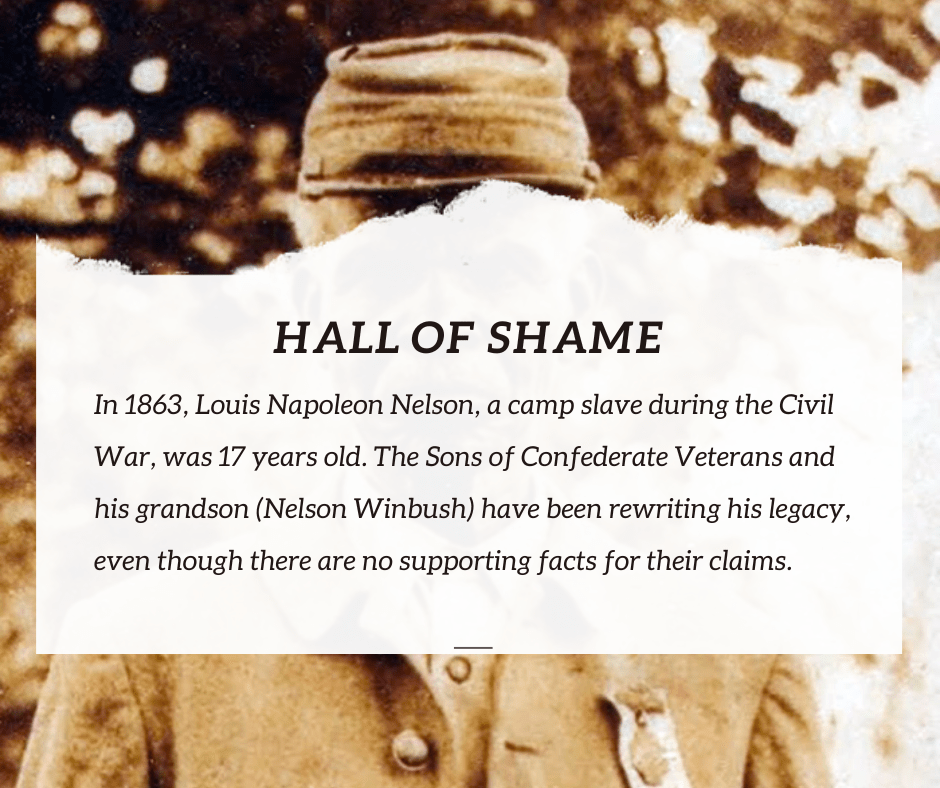
If your child or someone you know is using Essential Civil War Curriculum for research, maybe they shouldn’t be. Essential Civil War Curriculum is run by Virginia Tech and is an example of organizations that decided not to fact check and verify the information via primary sources or maybe they just decided to “both sides” history because they couldn’t find a Confederate Black Chaplain. A few years ago, I sent an email asking them to remove the reference to Louis Napoleon as a Black Confederate chaplain.
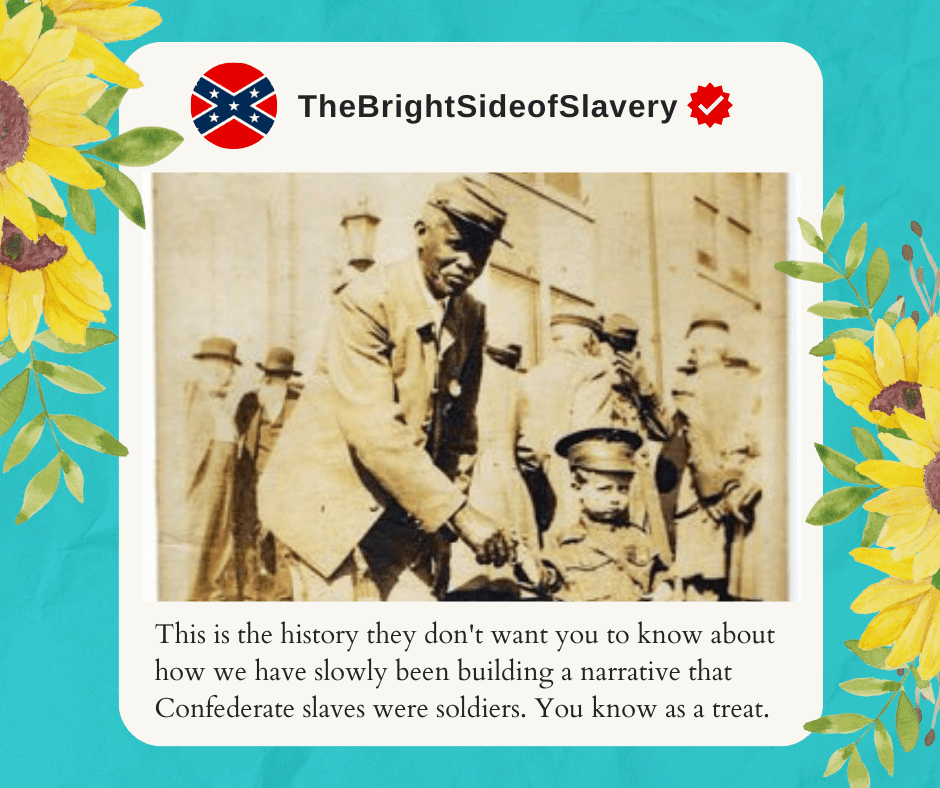
Here’s an example that is part of Lost Cause mythology and a lack of fact checking using primary sources. If they can’t get this right, it calls into question their credibility on everything else.
The passages in question is below. It’s from a snippet that appears in the Sept. 10, 1863 Religious Herald.
To the Confederacy also belongs a first in the history of military chaplains—the first black man known to minister to white soldiers. The September 10, 1863 issue of The Religious Herald, recounted how a Tennessee regiment was having difficulty securing a chaplain to conduct religious services for its soldiers. A slave in the regiment known by the men as “Uncle Lewis” enjoyed a reputation among the men of being devout. He was asked to fill in temporarily and conduct a worship service.
The soldiers were so pleased with his service that they asked him to continue to serve as their chaplain from the spring of 1862 until the close of the war, during which time the regiment experiences two revivals. The Religious Herald correspondent describing the services wrote, “He is heard with respectful attention, and for earnestness, zeal, and sincerity, can be surpassed by none.” To this Tennessee regiment, as well as the reporter who wrote the story, the service of their black chaplain was “a matter of pride.”[13]
Uncle Lewis’s full name was Louis Napoleon Nelson and he served with Company M, 7th Tennessee Cavalry, which was part of Nathan Bedford Forrest’s command. According to Nelson’s grandson, Nelson Winbush, his grandfather told him that a number of Yankee soldiers once joined the Tennesseans during a worship service and, after its conclusion, “all shook hands and went back to fighting.”[14]
Why is this an issue?
“He is heard with respectful attention, and for earnestness, zeal, and sincerity, can be surpassed by none.” This phrase is important, because it appears in 3 different newspapers in 1863. It’s not about a teenager (which Louis Napoleon Nelson) would have been, it’s about an “Old Negro”. “Uncle” is generally the title given to an older Black man. Louis Napoleon Nelson would have been about 17 years old at this time, given that he was born in 1846.
- Time-Picayune , New Orleans – November 19, 1863
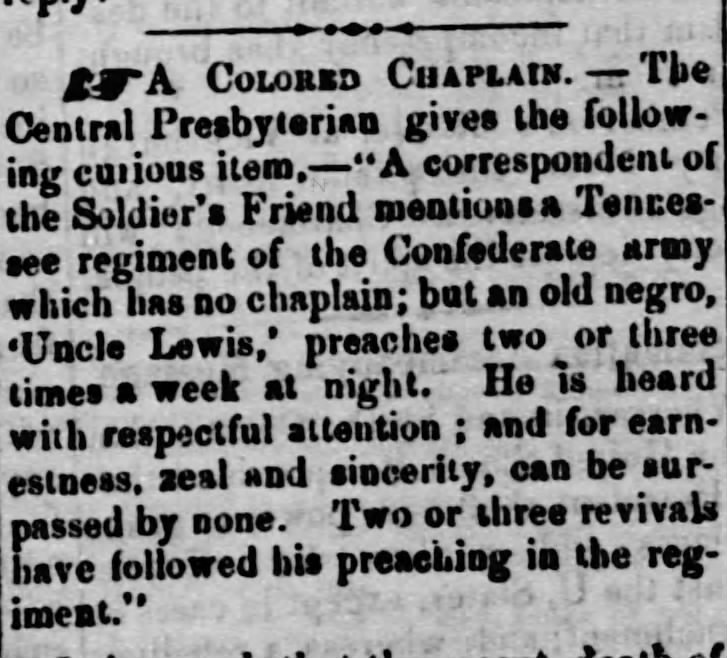
- The Essex County Standard, Dec 9 and 11th 1863
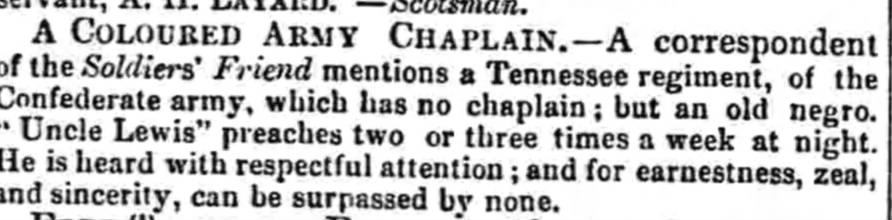
- The Oskaloosa Independent, Oskaloosa, Kansas · Saturday, Dec. 12, 1863
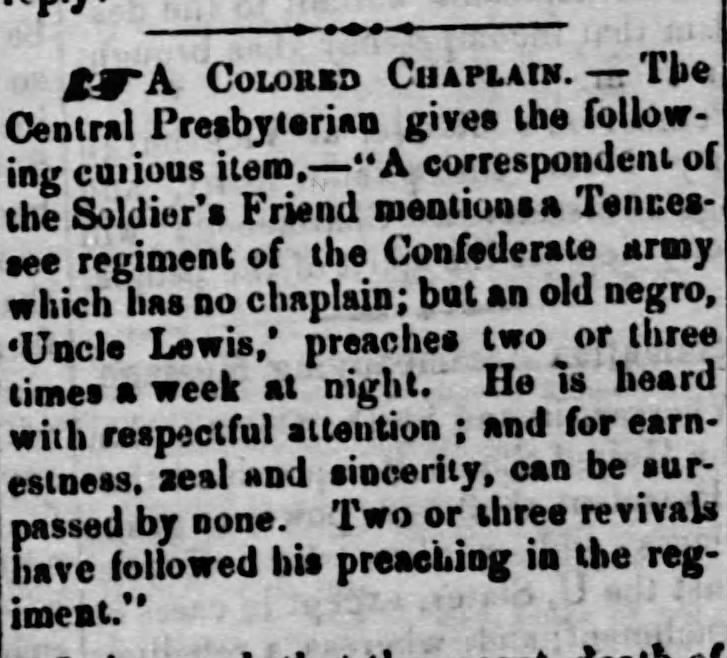
The “Uncle Lewis” in this article is in no way Louis Napoleon Nelson, which looks like the the only source they bothered to use. There has never been a mention of Louis as a Chaplain (not even for his obituary that was printed in the paper).
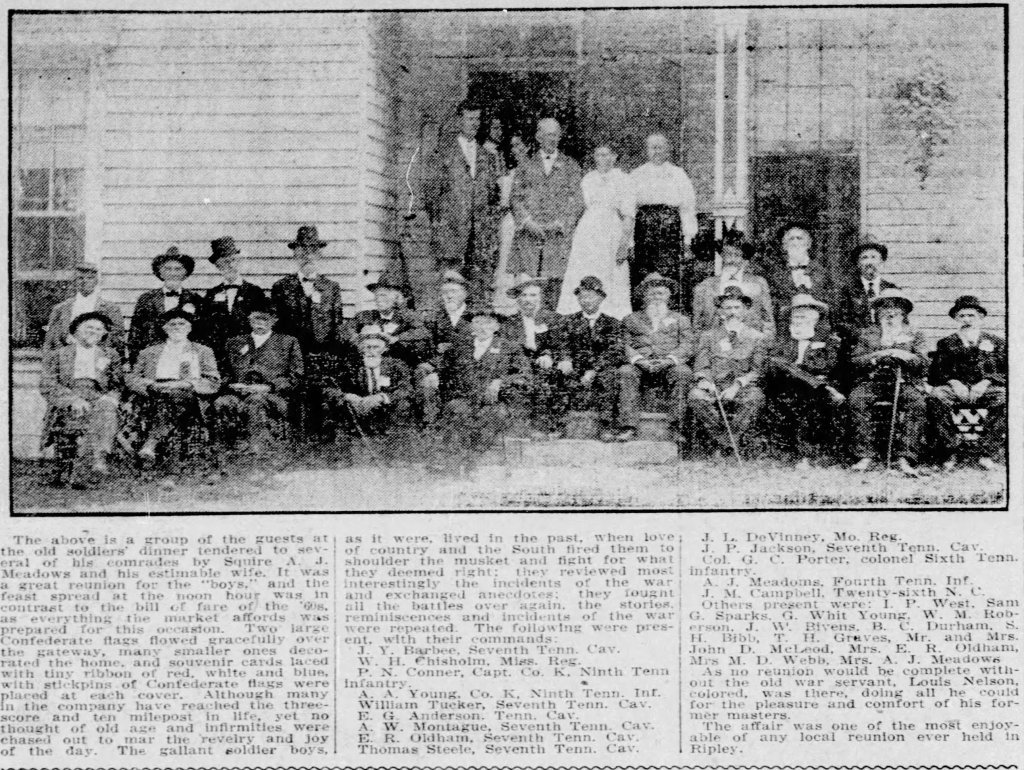
Even in this artcle from 1912 – Louis is mentioned as an “old war servant”.
Will Essential Civil War Curriculum do the right thing and correct their article which plays into Lost Cause mythology? Or will they continue to use one inaccurate source, Nelson Winbush? Winbush himself admits that he heard these stories from his grandfather as a child. He would have been just 5 years old. Finally, the last paragraph they quote from Nelson (which appeared in a Florida newspaper), makes even more sense for it to have been told to a child.
According to Nelson’s grandson, Nelson Winbush, his grandfather told him that a number of Yankee soldiers once joined the Tennesseans during a worship service and, after its conclusion, “all shook hands and went back to fighting.”[14]
Which battle was this? What soldiers or other people corroborated it? Where are the sources? There are none, just like there’s no source of him being a chaplain or a rifleman. Similar to how he applied as an ex-servant/slave for his pension and not as a solder.
I am begging the media to do any minor form of due diligence and if you claim to be an educational institution then accuracy should matter to you.
Here are some questions?
- What would qualify Lous Napoleon Nelson as the first Black Chaplain given the article wasn’t written about him?
- For old “Uncle Lewis” what would make him qualified as a Chaplain given there is no record of him ever receiving pay?
- Why are they leading people to believe that Louis Napoleon was the chaplain throughout the war when the Company M had a chaplain and Louis is not mentioned in any memoirs or firsthand accounts, and not even in his obituary, yet his owner/enslaver’s biography and obituary detail his service.
- If these folks were so proud of the first “Negro” chaplain, seems like someone would have remembered it and would have added it to over the more than 7 articles that were written about Louis attending Confederate Reunions.
All articles about Louis Nelson that appear in the Commercial Appeal:
- https://www.newspapers.com/article/the-tennessean-ripley-negro-survivor-of/82837949/ – 1934
- https://www.newspapers.com/article/the-commercial-appeal/95146989/ – Here Louis Nelson mentions he didn’t care for freedom because he was raised right by his slave owners. 1933
- https://www.newspapers.com/article/nashville-banner/153301855/, 1932
- https://www.newspapers.com/article/nashville-banner/153382229/, 1929
 It's about Heritage!