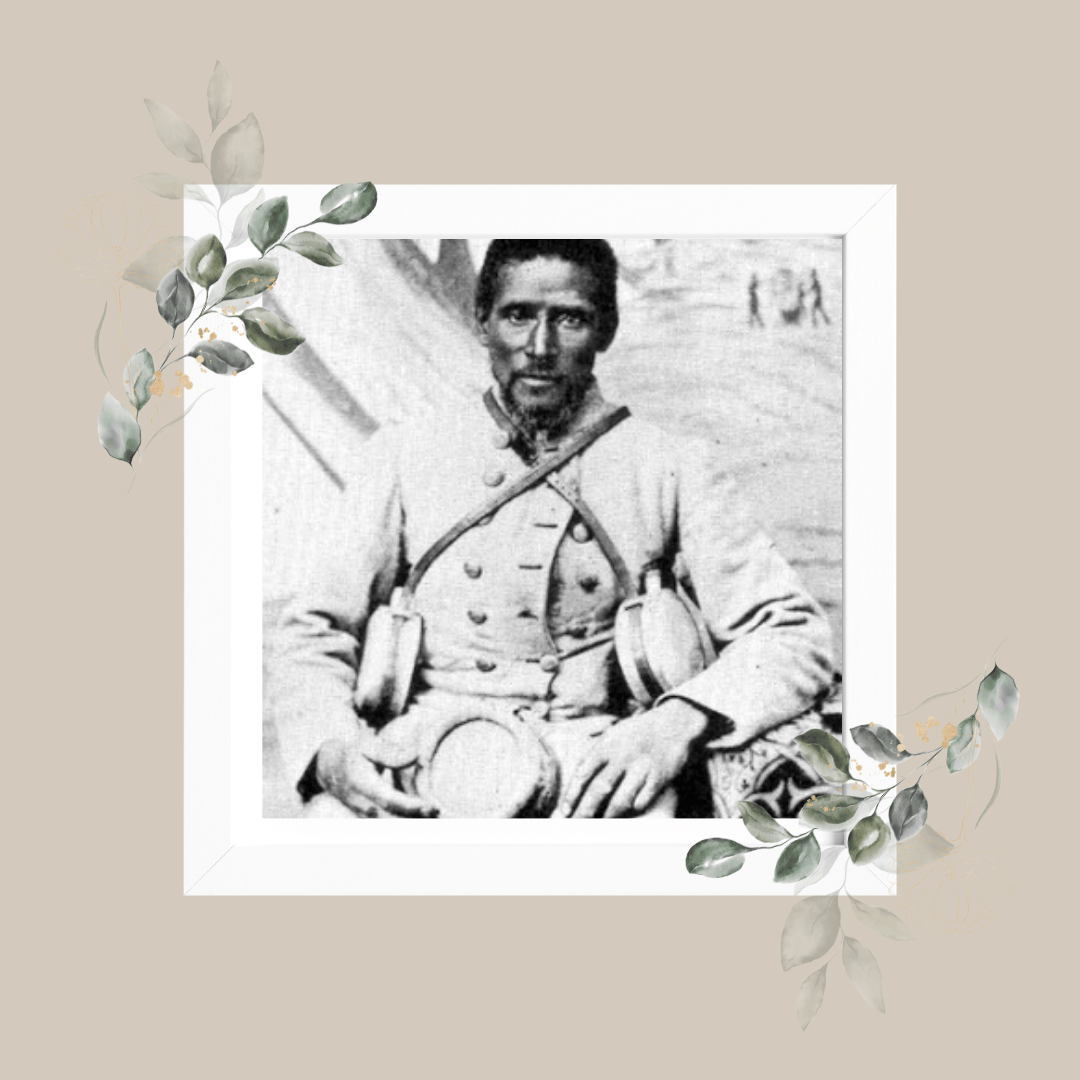
When referring to camp slaves, Confederate soldiers consistently used the terms “servant,” “cook,” or “negro”—making a clear distinction that the African Americans traveling with Lee’s army were laborers and servants, not soldiers. –
Cooper H. Wingert – Slaves Forced to Serve Confederate Army Had to Choose Freedom or Family
Marlboro Jones is often used in memes emphasizing the diversity of the Confederate army. They’ll often list out French, Jewish, black Confederates, etc. But a big difference between the “black” confederates versus everyone else they list is that Marlboro Jones was not a soldier. He was enslaved in the Confederate States of America and he had no choice on whether he went to the war or not.
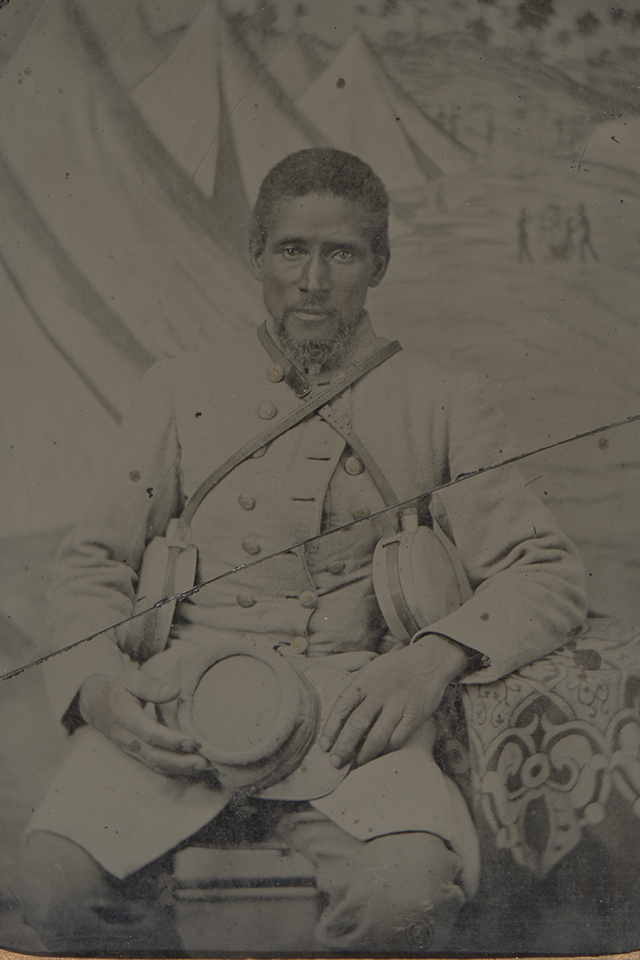
Marlboro Jones, enslaved by Captain Randal F. Jones of the 7th Georgia Cavalry, sat for a formal portrait in a Confederate uniform. According to historynet.com, the canteens indicate his role as a camp slave rather than a fighting man. (Virginia Museum of History and Culture)
People who want to honor Marlboro should ask how they can order someone “deciding to save their master”, without asking is it just saving their masters or saving themselves? What would it look like if an enslaved black person returned without their Master’s body? How might that slave be punished? What if in the case as Silas Chandler, that enslaved person also had a family and children back on the plantation?
Unsurprisingly, there are few known words spoken by Marlboro Jones, himself. And that’s what makes his legacy and story so easily co-opted by people who do not care about the truth of events, only like many Southern mores, just how they look. And I say that as a Southerner, appearances of things can be much more important than the actual reality.
For more on Marlboro Jones, you might try Editors, Peter Wallenstein and Bertram Wyatt-Brown. Lucinda H. Mackethan. “Reading Marlboro Jones: A Georgia Slave in Civil War Virginia“, Virginia’s Civil War. Charlottesville, VA: University of Virginia Press, 2005.
 It's about Heritage!